

What is a REVOCABLE LIVING TRUST? It is a legal document in which you (the "grantor") transfer ownership of your assets into a trust that you control during your lifetime. Being revocable, it can be changed or cancelled at any time while you are alive.
You are basically creating a clear, legally binding instruction manual for your successor trustee in which you appoint (typically a family member or person who has a fiduciary role) to follow in the management of distributing your assets. This can help prevent family disagreements and confusion at the time of your asset distribution. Understanding how it works is the first step toward securing your family’s future and ensuring your wishes are carried out exactly as you intend.

A lot of people think that once they've signed a will, their family is covered — but that's only half true. A will only states your wishes and names an executor. The will still has to pass through probate court in order for its assets to be distributed, a process that can take months to over a year, costs the estate in fees, and becomes public record.
A properly funded Living Trust skips the probate process entirely: since your assets are already owned by the trust while you're alive, your successor trustee will be able to distribute everything privately — in as little as weeks — once you're gone.

It is revocable, which means you can modify, add to, or dissolve it entirely whenever you want as long as you are alive and mentally competent. It is created and takes effect during your lifetime, not at death. You typically act as your own trustee, so you retain full control of the assets inside it — managing, spending, and investing them exactly as you did before. You name a successor trustee who steps in to manage or distribute the assets when you die or become incapacitated.
Main Benefits
Avoids Probate & Protects Privacy
Assets pass directly to beneficiaries without court probate, saving time and fees. Unlike a will, a trust is not a matter of public record. If you become incapacitated, your successor trustee can manage your affairs immediately — without a court appointing a guardian.
What It Does Not Do
Taxes & Creditors
Because you still control the assets, the IRS counts them as part of your taxable estate — a trust does not reduce estate taxes. Assets also remain accessible to creditors during your lifetime.

Retirement accounts, including IRAs, Roth, and 401(k)s, as well as Health Savings Accounts. These should not be retitled in the name of a trust, as doing so may trigger an immediate taxable distribution.

Our primary service is to guide our clients through the acquisition of a comprehensive Revocable Living Trust package.

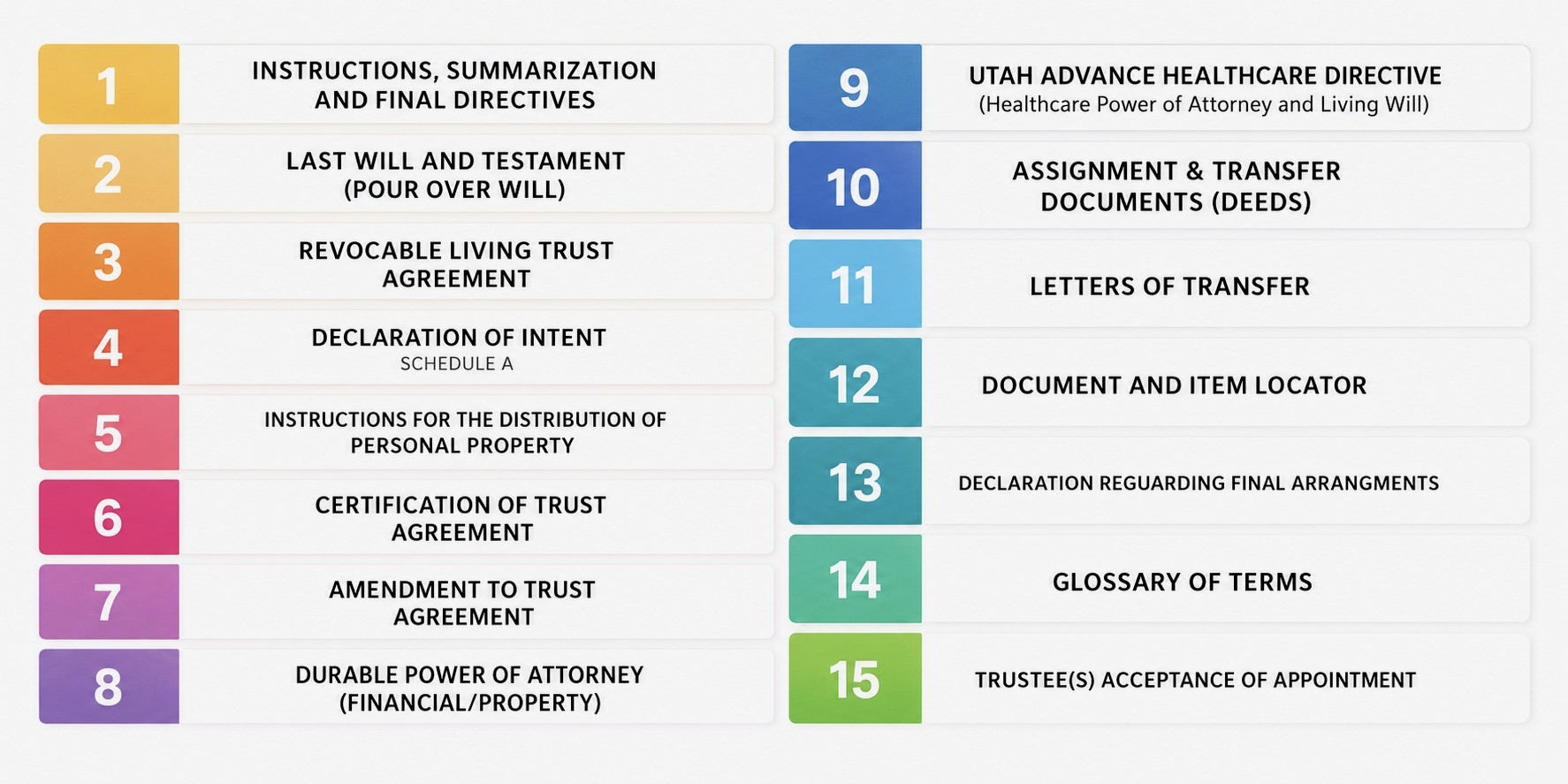

No additional fee for Funding assistance
No additional fee for After care Advice
No required estate settlement charges built into the Trust. When your loved one passes away you don’t need an attorney to distribute assets, but we will be there to assist if need us.
Our services are not limited to Living Trusts, we also offer in-house and through trusted partner affiliates, financial and estate planning services, Funeral Planning, Medicare and Medicaid advice or planning. Conventional and conforming loans and FHA and reverse mortgage loans. Personal injury attorneys. Market evaluations for residences etc. We have many skills and affiliates to offer our clients.

Dean S. Ellis , PhD





We do consultations In-Home, Over the Phone or via Zoom.